The Institute for Global Cooperation and Understanding (iGCU) at Peking University, in partnership with Qiming Venture Partners, officially launched the “Building Global Consensus on AI Guardrails” research project on January 23 in Beijing. Professor Wang Dong (Professor at the School of International Studies and Executive Director of iGCU, PKU) presided over this event.
Professor Jia Qingguo, Standing Committee Member of the CPPCC National Committee,Professor at the School of International Studies and Director of the Institute for Global Cooperation and Understanding (iGCU) delivered the opening speech via video. Professor Jia emphasized that effective AI governance is a critical global challenge necessitating urgent international collaboration. Duane Kuang, Founding Managing Partner of Qiming Venture Partners, added that while AI is a transformative force, establishing a dialogue framework based onacommon understanding is essential to navigate its risks.

Jia Qingguo delivering his speech.

Kuang Ziping delivering his speech.
During the expert seminar, participants offered strategic insights into governance frameworks. Wu Zhiqiang, Executive Dean of PKU’s AI Institute in Wuhan, called for prioritizing resources on realistic “systemic risks” rather than hypothetical future threats. Comparing AI governance to food safety, Daniel Castro, Vice President of the Information Technology and Innovation Foundation (ITIF), noted that while national approaches may differ, the focus must be on ensuring basic safety standards through open science.
Addressing implementation, Wei Kai from the China Academy of Information and Communication Technology (CAICT) proposed a "dynamic safety" concept driven by a continuous "PDCA" (Plan-Do-Check-Act) management cycle. Yale Law School’s Karman Lucero suggested that effective frameworks must address political and institutional differences frankly to achieve actionable consensus. Dai Xin of PKU Law School highlighted that guardrails serve primarily to maintain social trust amid technological uncertainty, while Concord AI’s Jason Zhou called for operationalizing these principles through specific risk assessments and model testing.
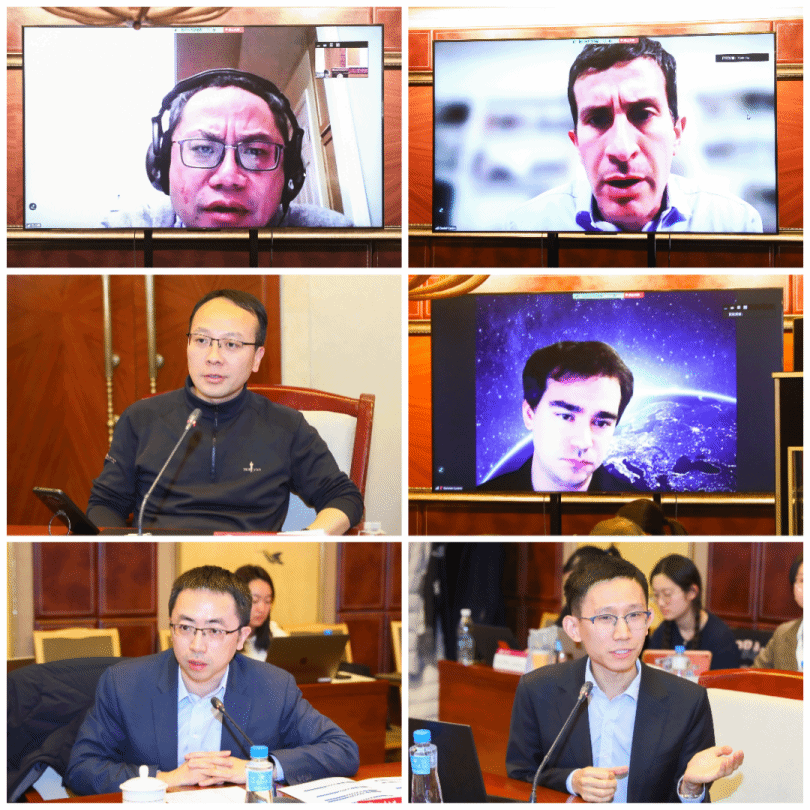
Speeches by Guest Attendees
The project plans to incorporate these insights into its forthcoming report, “The International Landscape of AI Governance”, to foster practical global cooperation.

Group Photo with Guest Attendees







 Subscription