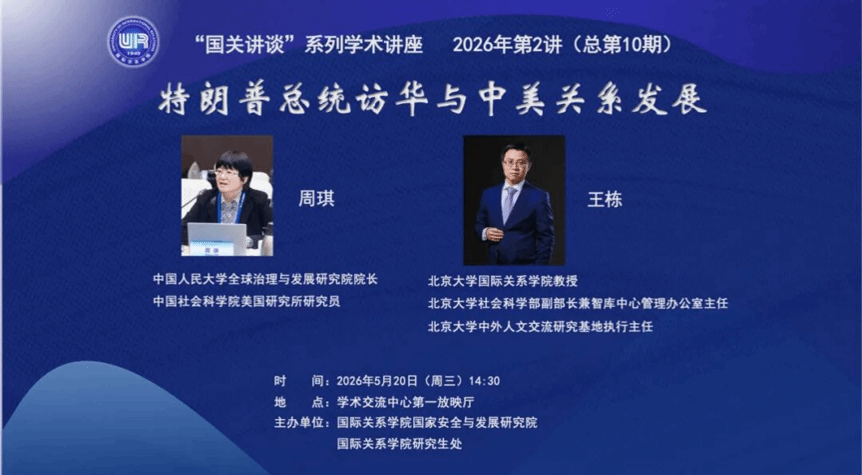
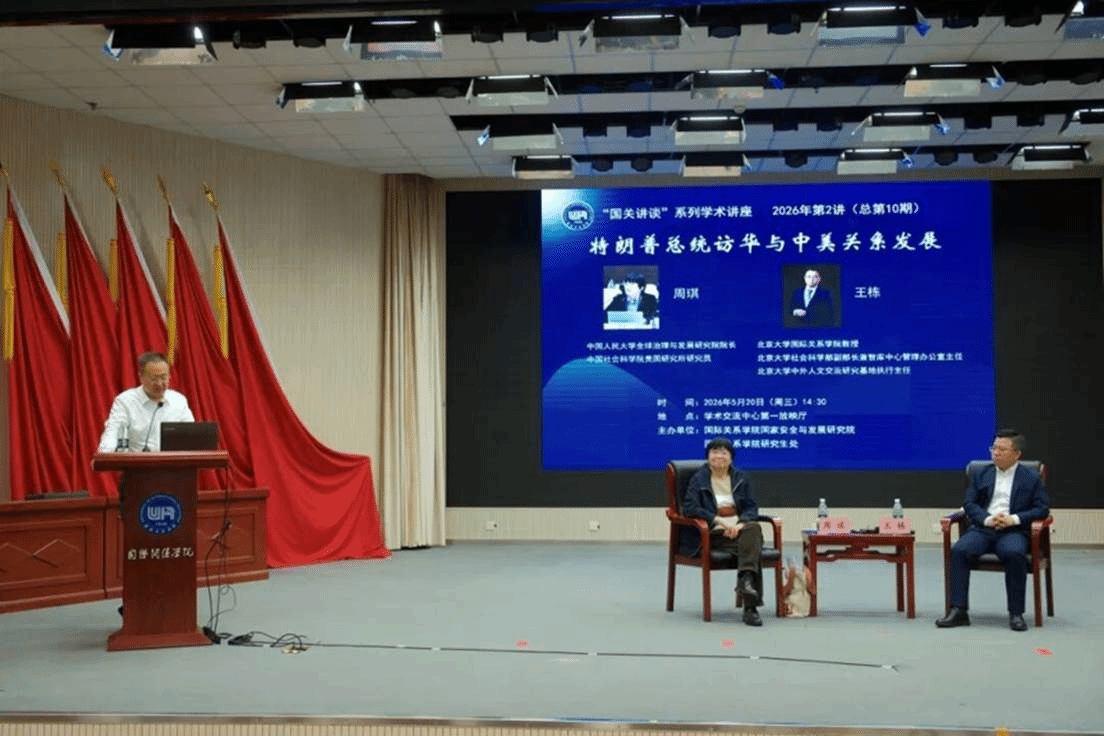
On the afternoon of May 20, the 10th lecture of the International Studies Lecture Series, jointly hosted by the Institute for National Security and Development and the Graduate School at the University of International Relations, was held in Screening Room 1 of the Academic Exchange Center. The lecture, themed “President Trump’s Visit to China and the Development of China-U.S. Relations,” featured Prof. Zhou Qi (Dean of the Institute of Global Governance and Development at Renmin University of China; Research Fellow at the Institute of American Studies at Chinese Academy of Social Sciences) and Prof. Wang Dong (Professor of the School of International Studies at @Peking University; Executive Director of iGCU) as keynote speakers. Faculty members and students gathered to exchange views on the new changes, trends, and challenges in current China-U.S. relations. Prof. Hu Jiping (President of the University of International Relations), Prof. Kang Yanmei (Vice President of the University of International Relations), Prof. Yang Huafeng (Director of the Graduate School at the University of International Relations), Dr. Liu Zhongwei (Head of the Research Office at the University of International Relations), and Tan Xiuying (Editor-in-Chief of Journal of International Security Studies) attended the lecture. The lecture was moderated by Li Mengxin (Deputy Director of the Research Office at the University of International Relations).
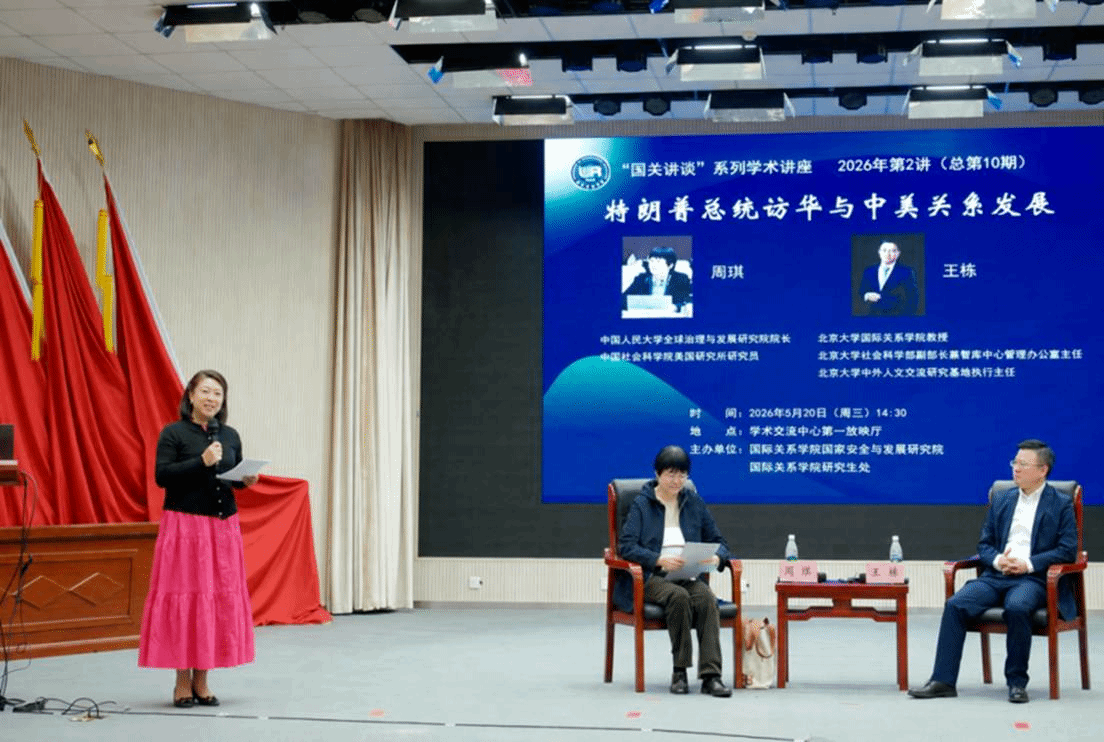
Deputy Director Li Mengxin moderating the lecture
Adjustments in China-U.S. Relations Against the Background of President Trump’s Visit to China
Prof. Zhou offered a systematic analysis of the Trump administration’s strategic adjustments toward China since the beginning of his second term, changes in the pattern of China-U.S. competition, and the evolution of the global strategic focus. She pointed out that a notable shift in the Trump administration’s current China policy lies in a new adjustment to the positioning of China-U.S. relations. Unlike the previous emphasis on China as a “strategic competitor,” the latest U.S. national security strategy framework places greater emphasis on economic competition and cooperation. This shift reflects both the practical need for the United States to reallocate its global strategic resources and its strategic contraction and restructuring amid changes in the international landscape.
Focusing on changes in U.S. strategic priorities, Prof. Zhou analyzed the trend of the United States shifting from an “Indo-Pacific priority” toward greater attention to the Western Hemisphere and Latin American affairs. While refocusing on homeland and neighboring security, the United States has continued to strengthen competition with and restrictions on China in areas such as technology, industrial chains, critical minerals, and high-end manufacturing. China-U.S. competition is thus extending from traditional trade and economic issues to deeper competition over technological and industrial systems. Regarding China-U.S. technological competition, Prof. Zhou discussed issues including rare earth supply chains, the chip industry, and “decoupling and supply-chain disruption” in high-tech fields. She noted that the United States has continued to tighten export restrictions on advanced chips, semiconductor equipment, and artificial intelligence-related technologies, while China has gradually developed its own advantages in critical mineral supply chains and the construction of an independent innovation system. The core of current China-U.S. competition is no longer merely a trade issue, but also concerns national security, industrial capacity, and global strategic leadership.
Prof. Zhou concluded that competition objectively exists between China and the United States, but competition does not necessarily lead to confrontation. The key lies in whether the two sides can establish effective mechanisms for strategic stability and risk management, so as to prevent competition from spiraling out of control. In light of recent high-level interactions between China and the United States, “positive stability, healthy competition, manageable differences, and a promising prospect for peace” may become an important direction for the future development of China-U.S. relations.
Understanding the New Logic of China-U.S. Interaction Through a “Constructive Strategic Stable Relationship”
Prof. Wang delivered remarks on the theme of “Transcending the Thucydides Trap: Strategic Stability and the Future Development of China-U.S. Relations.” Against the backdrop of accelerating changes unseen in a century and profound adjustments in the international order, China-U.S. relations have entered a new historical stage. President Trump’s visit to China is not only the first official visit to China by a U.S. president in many years, but also marks a new historical starting point for China-U.S. relations. Focusing on the “constructive strategic stable relationship” proposed by the two sides, Prof. Wang offered an in-depth interpretation from the perspective of international relations theory. He noted that the concept of “strategic stability” originally emerged from the context of U.S.-Soviet nuclear arms control during the Cold War, while the “constructive strategic stable relationship” currently proposed by China and the United States has gone beyond the traditional realm of military security and become a holistic strategic framework for bilateral relations in the new era. This framework does not simply seek to maintain a fragile balance. Rather, on the basis of recognizing the objective existence of competition, it aims to offset confrontation through cooperation and manage differences through communication, thereby promoting long-term, dynamic, and sustainable stability in China-U.S. relations. With regard to China-U.S. competition, China has consistently opposed defining bilateral relations through “strategic competition,” but this does not mean denying the existence of competitive factors. The key is that competition must have boundaries, rules, and bottom lines, and must be prevented from sliding into zero-sum rivalry and full-scale confrontation. Prof. Wang further emphasized that a “constructive strategic stable relationship” embodies important implications such as cooperation as the mainstay, measured competition, manageable differences, and a promising prospect for peace, offering a new theoretical and practical path for exploring major-country relations in the new era.
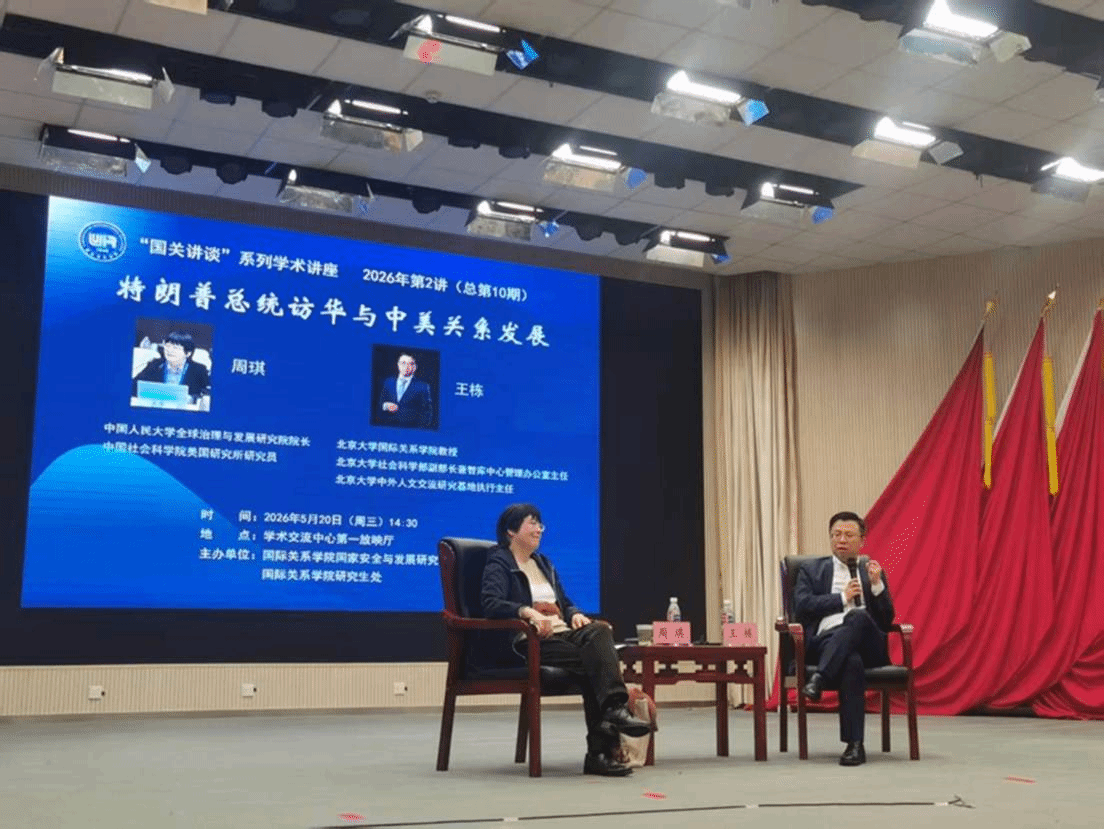
Prof. Wang Dong delivering the lecture
During the interactive discussion, students raised questions on hot-button issues including China-U.S. technological competition, artificial intelligence governance, the restructuring of global industrial chains, the Taiwan question, and the future evolution of the international order. Drawing on developments in the international situation and their own research experience, the two experts offered in-depth responses to these questions.
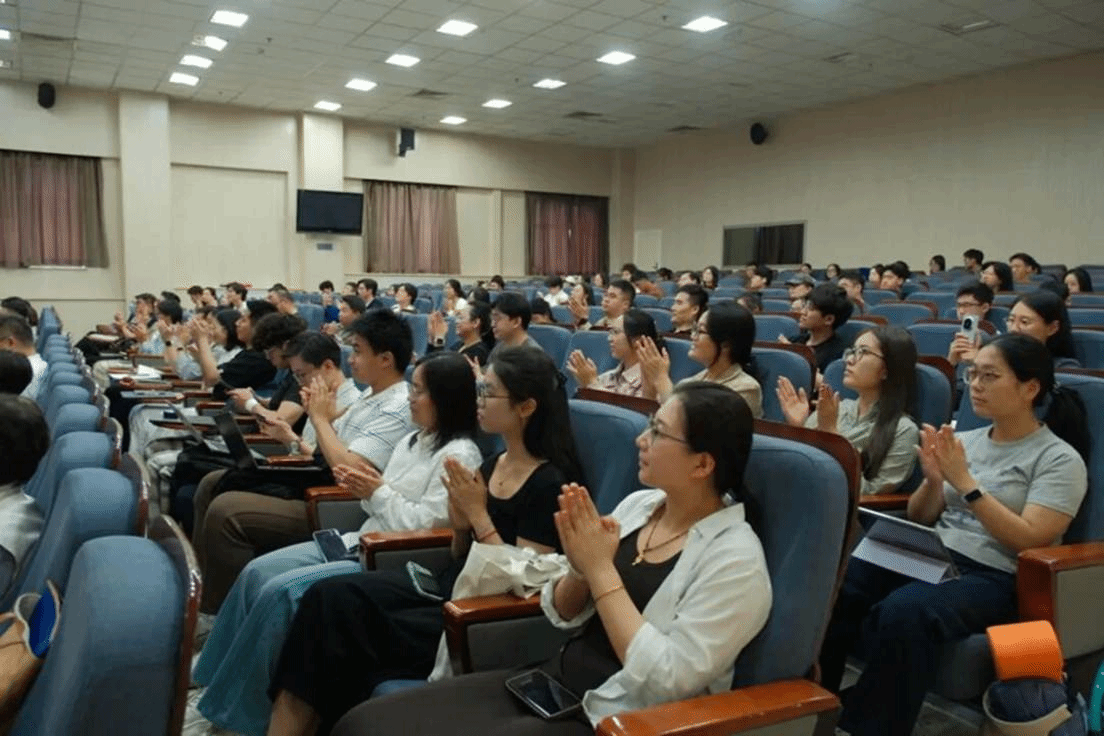
Lecture venue
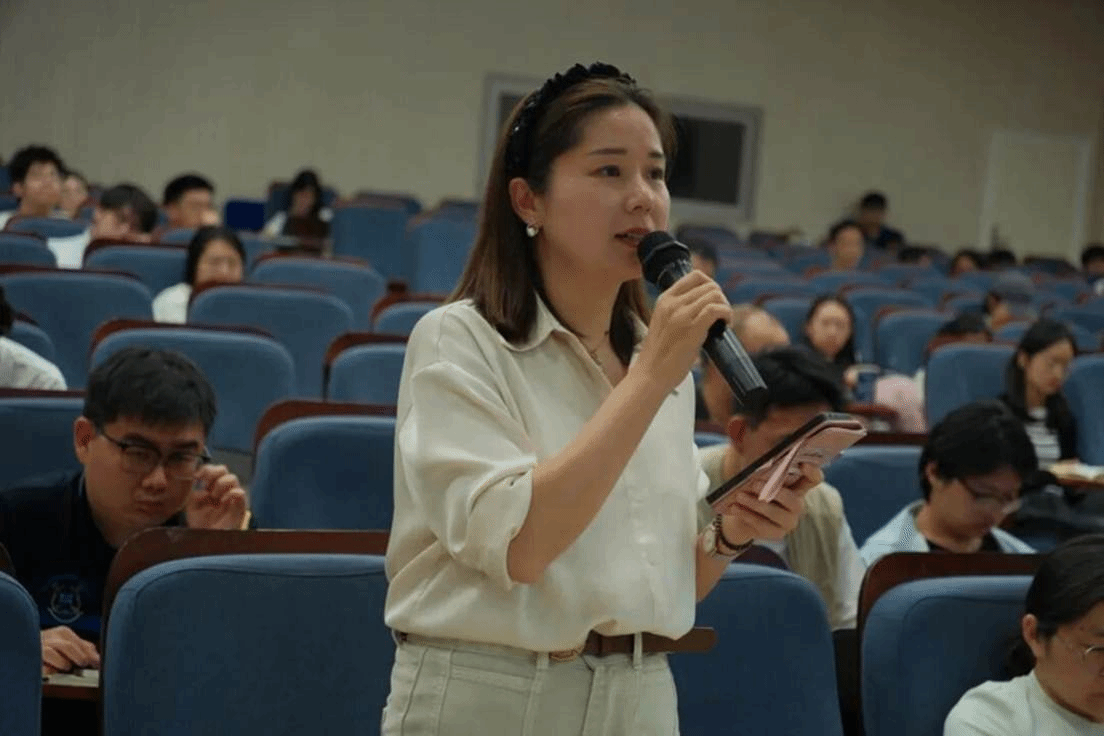
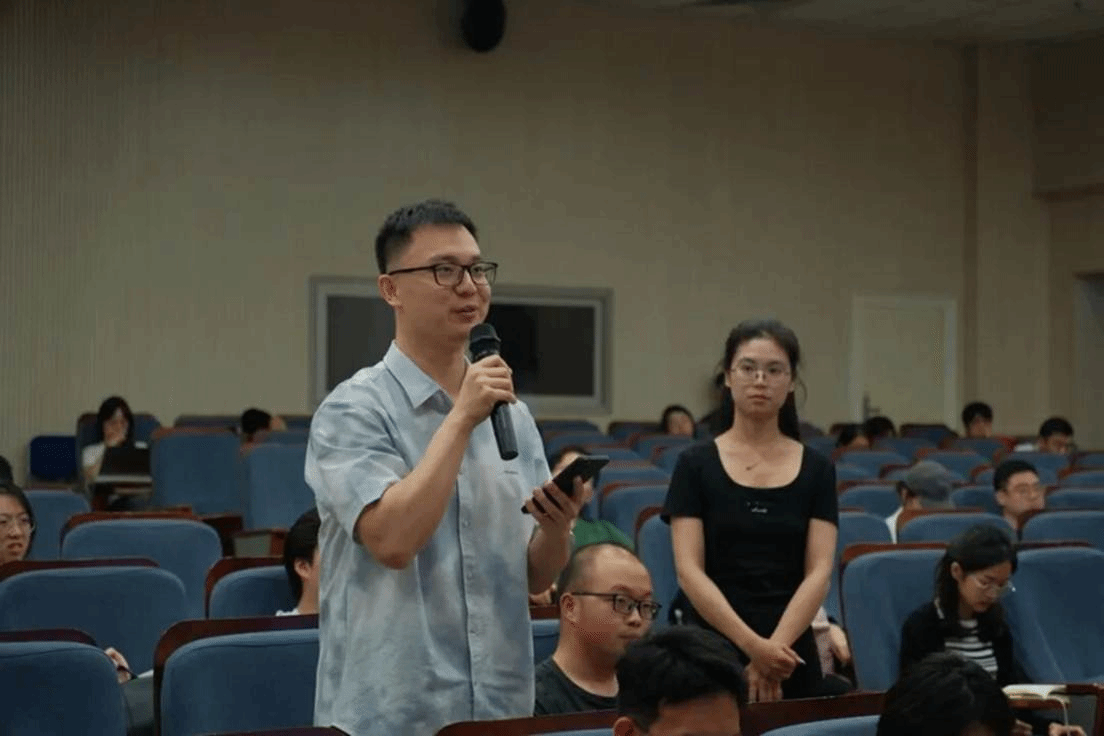
Faculty members and students actively participating in the Q&A session
At the end of the lecture, Prof. Hu delivered concluding remarks on the two experts’ insightful presentations and expressed sincere gratitude to both keynote speakers. He noted that the lecture closely addressed the development of China-U.S. relations against the backdrop of President Trump’s visit to China, offering in-depth analysis of important issues such as the evolution of the international strategic landscape and China-U.S. competition and cooperation. The lecture was both highly relevant to current realities and grounded in profound theoretical reflection, providing important inspiration for faculty members and students to accurately understand the current international situation and deepen their research on China-U.S. relations. Prof. Hu emphasized that as the international situation undergoes profound adjustments, the study of international issues faces new opportunities and challenges. He encouraged students to further strengthen their awareness of key questions and their capacity for academic reflection, integrate theoretical learning with real-world observation, and continuously broaden their international perspective and enhance their professional competence.
Prof. Hu Jiping delivering concluding remarks on the lecture







 Subscription